I don’t know how to write this without sounding self-pitying or aggrieved, but I feel like I have to get it out, so…
One of the worst parts of the loss of mobility that you don’t really think about when you are considering all the physical limitations is the emotional and actual isolation that ensues when certain things are no longer under your control.
I have always been an introvert, not particularly interested in large amounts of socializing, not a party person, not someone who would just go out to a bar to meet people for drinks. I have always prioritized pajamas, a cup of tea, and a book over an after-work meet-up. But I also enjoyed entertaining in my home and, while my work schedule never allowed for much, I used to go all out a few times a year and throw a memorable dinner party. My biggest one, for at least half a dozen years, was my Summer Solstice bash, which started out as a big party for 50 in my back yard and then, when that proved more than I wanted, evolved into a sit-down dinner for 12 or 18 people for which I did all the cooking, soup to nuts, as they say. One year I did a taco bar; another year was all Greek, with homemade spanakopita, falafel, and baba ghanoush; and my favorite go-to recipe was green lasagna, with spinach noodles and pesto made with fresh basil from my garden and a salad of just-picked tomatoes. Because yes, I also used to be an active gardener. (I was the neighbor who left giant zucchini on your doorstep in the dead of night.)
These dinners would take place on my screened-in patio, the only place for which I could gather sufficient seating for all the friends and family I included, and it would be an oasis of candles, clinking wine glasses, and laughter in the warm, fragrant dark of the shortest night of summer, with exclamations of delight as I carried out the coffee pot and the Chocolate Charlotte I had made for dessert.
During the winter months, one favorite entertaining choice was to make two or three different kinds of soup—potato leek, split pea, minestrone, maybe—accompanied by a big salad and homemade bread, and people could choose their soup or have all three in a row if they wanted. Or I’d make a big pot of Bonanza Beans and bake some cornbread with cheese and jalapeños in my biggest iron skillet. Yes, I used to love to cook, and I was good at it.
Being a single person in a family of mostly married people meant that I never got to do holidays. Aside from one year soon after I turned vegetarian, when I and my best friend and business partner, Matthew, decided to host Thanksgiving for all our family and friends in my little house by clearing the living room of other furniture and lining up about eight card tables down the center, I have always gone to Mom and Dad’s house in Riverside for Thanksgiving, and my cousin Carol Sue’s house in Woodland Hills for Christmas, along with the rest of the extended family and whatever waifs and strays we decided to include. But I always contributed to the meal, whether it was a big salad, a vegetable, or home-baked rosemary rolls, and maybe a dessert as well. I always had some input into what would be served and what time we would be getting together. But Mom and Dad died more than a decade ago, and Carol Sue followed them this past year, so everything is changing, for the family as well as for me.
In the years since lipoedema and lymphedema kicked in, my social life in general has really taken a hit. The simplest things that other people wouldn’t even think of as a consideration have stumped me. One friend has three steps down to their hillside house, and then three steps up onto their porch, and normally I could negotiate that many steps if I made an effort, but the three steps down have no railing, and I can’t risk it with just a cane and can’t do it with my walker either, so I have to say no when she invites me. Others have long flights of steps to their door, or limited parking so that I have to walk a block uphill or down from my car, and there are days when I can do it and days when I can’t, but I can’t govern which one it will be on the day I am invited.
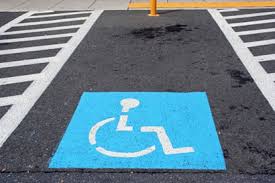
It’s not their fault—no one is expected to be able to accommodate disability in the way that public places are required to, and private homes aren’t going to have handicapped parking or elevators. But even in public places like restaurants or office buildings that do have those things, sometimes it is daunting to make it from the parking (if there is any left) to the elevator, down the hall, through the heavy push or pull doors, only to discover (as I have discussed here elsewhere) that there are no seats to accommodate you when you arrive. In a private home, being able to rise from a low sofa or chair or sit at a dining table for a couple of hours is equally as challenging. And when you are moored in place unless you make an extraordinary effort to rise and move about, the party swirls around you but may leave you an island of isolation in the midst of sociability as other people circulate. (And it’s mortifying to feel like people are sitting with you out of pity because they know you can’t move.)
All of this means that you start to turn down invitations, in anticipation of all the problems you will inevitably encounter, as you weigh up whether it’s worth it in pain and exhaustion (and embarrassment over your condition and your appearance) to pursue attendance of that particular event. And when you start cancelling, whether it’s for a doctor’s appointment or a birthday party, at first people are eager to reschedule you, but as time goes on, they give up and let you propose a date instead of offering one themselves, and soon you are permanently out of the loop or, at best, an afterthought. Again, not their fault, and completely understandable; people can’t be expected to pursue you forever without any positive response.
But…
To be on the receiving end is as painful, even for an introvert like me, as is my condition. To feel excluded, unimportant, dismissed, forgotten, is not a pleasant thing for any human being who is used to being an integral part of things for a lifetime, especially at a time in life when older or sicker friends and relatives have dwindled away, leaving you in isolation even before your disability exacerbates that.
People are kind; they say “please come, you don’t need to bring anything, we’d just love to have you here.” But to someone who has always done their part (and been complimented for it), this kindness is also a small humiliation that feels like being sidelined from the starting lineup, as my ex would say. (I did pick up a few football expressions from seven years of Monday night games that have stuck with me over the decades….) And when you’re no longer a central player in deciding the menu or the venue, you become excluded from a process of social discussion that (I believe) is essential to human nature, and it isolates you even more.
I don’t know what the solution is; the facts are, I can’t negotiate things I used to be able to do without even thinking about them; I can’t make commitments ahead of time when my state of health and well being shift on a daily basis; and the world can’t stop and wait for me to figure it out. I just know that sometimes I feel angry and frustrated at the turn life has taken for me, and I also feel afraid
and alone.
I understand what it’s like, now, for people who have to confront the choice of whether to stay in their homes or go live with strangers in a retirement facility because they can no longer manage for themselves; but I thought I would be looking at that situation at age 85, maybe, not now when my brain is still completely intact and the will to do everything I always did before is still so strong inside a body that just won’t cooperate with that brain’s impulses.
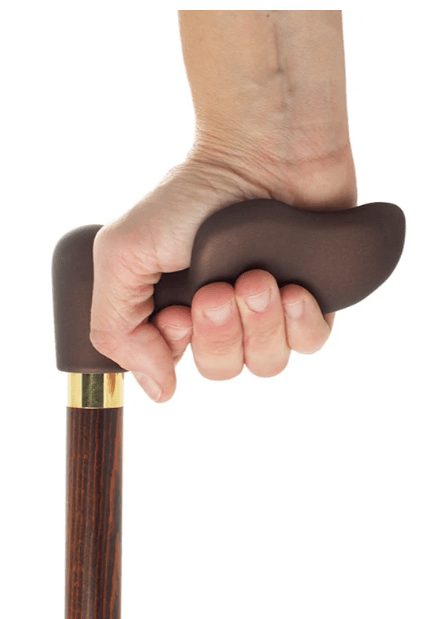
On my good days, I think about things like seeking out yet another doctor to see if there is some solution to my inflammatory state that hasn’t come up before. On my good days, I exercise more, drink more fluids, try harder to do things that are harder to do now. On my good days, I still have hope, still have expectations of myself that go beyond sitting on the sofa, at a desk, or at the kitchen table, worrying about getting from one to the other without the cane sliding out from under me.But between the physical problems and the ADD and brain fog that cause me to have trouble focusing or following through, those good days sometimes seem like they are diminishing exponentially even as I reach out to hold onto them, and I feel like I’m disappearing, even as I grow heavier and more immoveable in my corporality.


Leave a Reply